Middle School
-
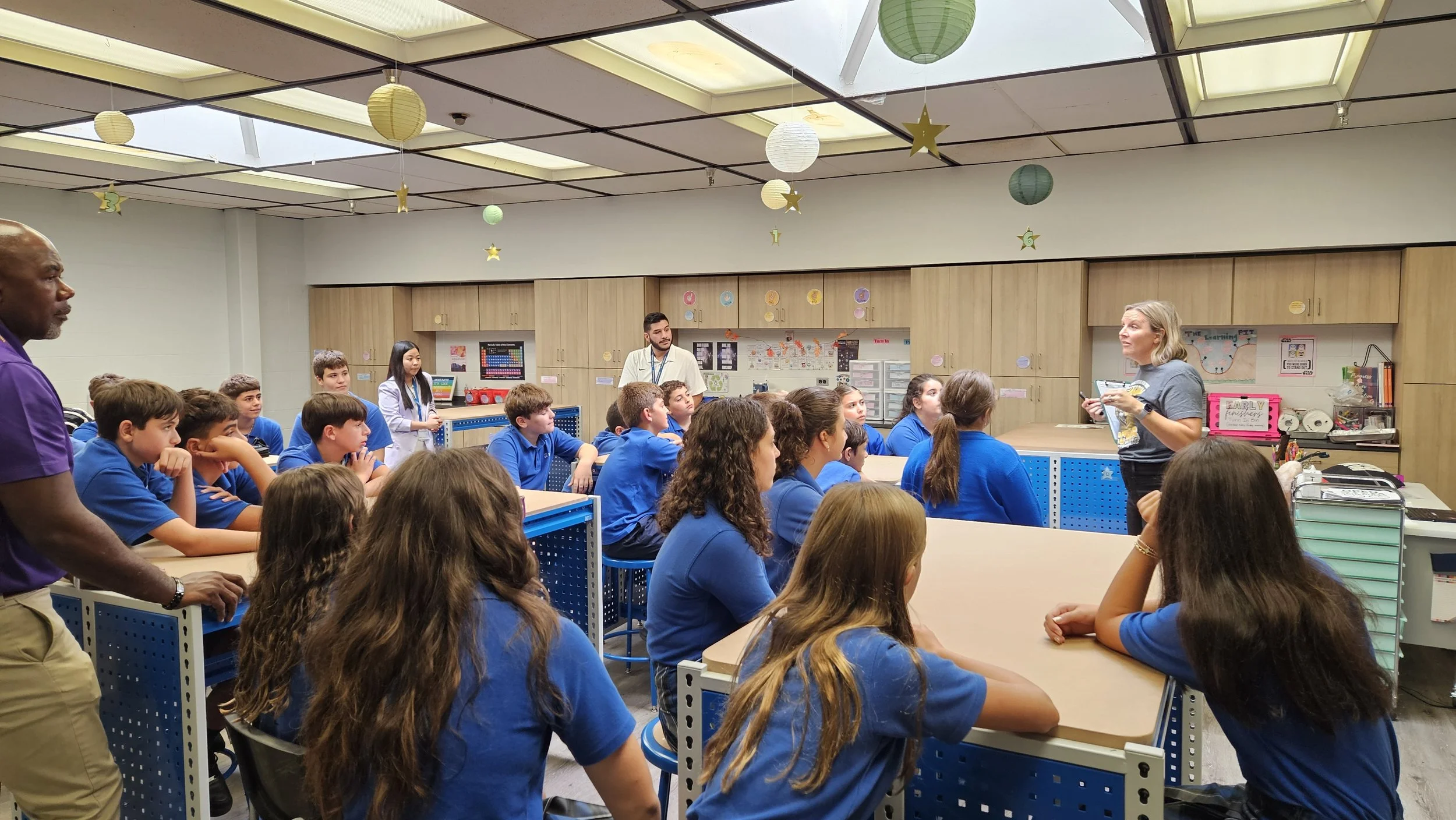
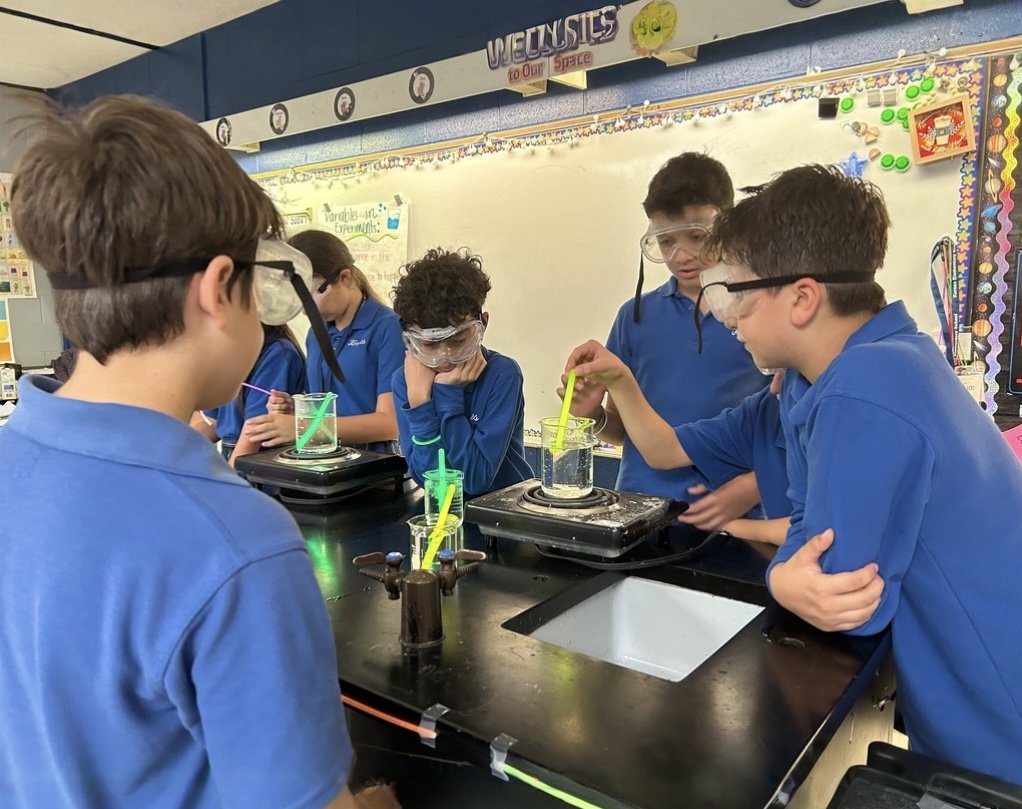
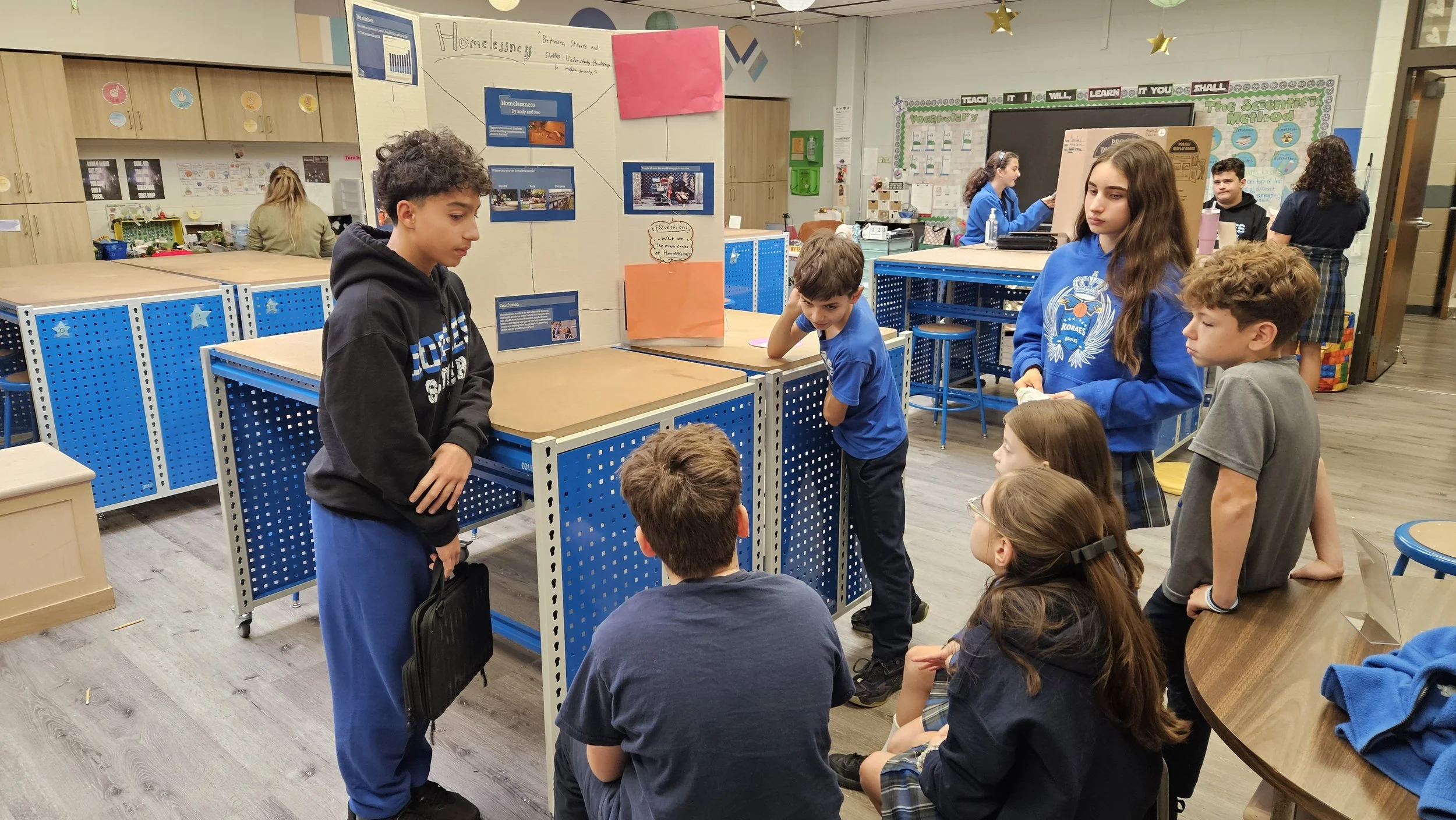
Middle school science emphasizes deep exploration of one major content area per year—Life, Earth, Space, and Physical Science. This structure allows students to dive deeply into each discipline, engaging in investigations that mirror the work of real scientists.
Every unit is grounded in the scientific method and engineering design process, encouraging students to question, experiment, and innovate. Lessons are NGSS-based and connected to real-world issues, giving students opportunities to research, collaborate, and apply their learning through projects, field experiences, and cross-grade experiences that connect classroom learning to authentic scientific work. Through the use of reading, writing, media, and technology, students strengthen their scientific literacy and confidence to ask big questions, preparing them to think critically about the world and their role in shaping it.
-
Koraes Graduates enter high school as proficient readers, thoughtful speakers, and confident writers. Our English Language Arts program is strategically integrated with social studies and the humanities, offering a rich, interdisciplinary environment where inquiry and relevance can be experienced across subject areas. Students read extensively and closely through a wide array of English and World literature, such as Markus Zusak's The Book Thief, Ruth Fosdick Jones's Boy of the Pyramids, Laurie Halse Anderson's Fever 1793, Jimmy Murphy's American Plague, and a thoughtful selection of poems from the past to the present, including voices from both classical and modern days.
The ELA program not only encourages them but also facilitates; by authentic and thoughtful critical thinking, they will be able to do so in various communication modes. Aspiring writers with excellent skills are developed among students who will be able to create art in different formats—informative, persuasive, argumentative—by using photo essays, argumentative writing, featured articles, and research as their medium. These are essential lifelong skills which empower students to consider the effect of their writing and thus, make deliberate, informed decisions. Classroom conversations and discussions regularly follow the arc of collaborative inquiry in an effort to promote students as considerate listeners, as well as articulate speakers.
Through this integrated curriculum, students cultivate a lifelong love of literature, a mastery of language, and the confidence to participate meaningfully in academic and civic discourse. -
Our middle school math program is designed to help students truly understand mathematics—not just follow steps. We follow the Building Thinking Classrooms model, which emphasizes collaboration, problem-solving, and reasoning. Students learn to visualize concepts, make connections, and explain their thinking, ensuring a deeper and more lasting grasp of the material.
In our classrooms, students are active learners—working together at vertical whiteboards, discussing strategies, and exploring multiple approaches to a problem. Rather than memorizing procedures, they discover why math works. This builds confidence and develops flexible thinkers who can apply their learning to new challenges.We also recognize that every student learns differently. With small class sizes and ongoing teacher support, each student receives the individual attention they need to thrive. We use MAP testing scores and direct teacher observations to place students at their appropriate level of math, allowing students to move into a higher math grade level so they will be challenged. Our class selections consist of Math 6, Math 7, Math 8 (Pre-Algebra), and Algebra.
Our goal is for all students to master essential skills while developing strong problem-solving abilities, forming a solid foundation for success in high school math and beyond.
-
6th Grade Greek Language Program
In 6th Grade, students refine their communication skills and grammatical precision while progressing toward Intermediate Mid-proficiency. They review and extend knowledge of verb tenses (including past continuous and perfect tenses), use connectors for paragraph cohesion, and read authentic Greek texts adapted for learners. Writing focuses on summaries, opinion paragraphs, and personal reflections, while oral work emphasizes fluency and pronunciation. Through cultural exploration—Greek history, music, and Orthodox traditions—students connect language with heritage and identity.7th Grade Greek Language Program
In 7th Grade, students build independence in expressing opinions, comparing ideas, and engaging in more sustained dialogue. Grammar includes conditional sentences, passive voice, and review of all verb tenses. Students analyze short stories, interviews, and informational texts, responding through written and spoken summaries. Technology platforms reinforce listening and pronunciation accuracy. Cultural units explore modern Greek life, current events, and diaspora communities, encouraging students to use Greek for real-world communication. Most students reach Intermediate Mid-proficiency by the end of the year.8th Grade Greek Language Program
In 8th Grade, students consolidate all prior learning and demonstrate proficiency across listening, speaking, reading, and writing. Instruction prepares students for Ellinomatheia certification (A1–A2 levels) and future academic or heritage Greek programs. Students read authentic texts, engage in debates and presentations, and write essays and reflections with grammatical control. Lessons emphasize fluency, accuracy, and cultural competence, empowering students to use Greek confidently in conversation, writing, and community life. By year’s end, most students achieve ACTFL Intermediate Mid to High proficiency, able to sustain conversations, narrate past events, and express ideas on familiar cultural and personal topics. -
Our inquiry-based social studies program encompasses civics, geography, history, and economics. The curriculum facilitates authentic and critical thinking. Students learn to utilize and decipher primary and secondary sources related to historical content. They learn to use facts and details in order to form understandings of skills and key concepts across social science and additional academic disciplines. Classroom discussions consistently follow instruction and the development of necessary skills in an effort to promote students as articulated speakers and considerate listeners.
Our social studies curriculum is strategically integrated with the humanities, including English language arts, offering a quality interdisciplinary environment where inquiry and relevance can be expressed across multiple subject areas. Students will engage with a thoughtful selection of literature from the past to the present including voices and perspectives from both classical and modern times.
Through this integrated program, students will cultivate lifelong interest in meaningful academic and civic discourse. -
Seventh grade students study the Acts of the Apostles and journey through the life of the early Church, the apostles, and especially of Saint Paul. In addition to learning about the history and activities of the early Church, we also try to take away life lessons learned through the faith, and teaching of the apostles based on the challenges they encountered in spreading the message of the Good News of Christ.
Our eighth grade students study from Orthodox Christian Ethics for Orthodox Christian Teens (OCE for OCT). Broken down into three sections, students begin with an introduction to Orthodox Christian ethics, followed by a study of the Ten Commandments. Students expand the meaning of each commandment and see how they assist in making good and healthy decisions. We conclude with a look at the Beatitudes as found in the Gospel. The main goal of religious studies in 8th grade is for students to learn how to practically apply Orthodox values and ethics in their daily lives. -
As students grow, the curriculum emphasizes skill development, teamwork, and understanding the rules of sports. A typical class includes:
Stretching and warm-up
Skill drills (e.g., dribbling, passing, fitness)
Scrimmages or team games such as basketball, soccer, or volleyball
Students are graded on participation, sportsmanship, preparedness, assessment, and effort. They are expected to:
Arrive prepared with proper clothing and footwear
Show respect for teachers, classmates, and equipment
Exhibit good sportsmanship and teamwork
Maintain safety and cleanliness in locker rooms and gym spaces
-
Middle school students deepen their artistic skills through our Middle School Art Extension, with a special focus on Greek art. They study Ancient Greek sculpture, pottery, and architecture, as well as the works of Modern Greek painters, combining hands-on projects with art history and cultural exploration. Students are encouraged to develop a personal artistic voice, refine technical skills, and engage in critical thinking about art, beauty, and meaning.
-
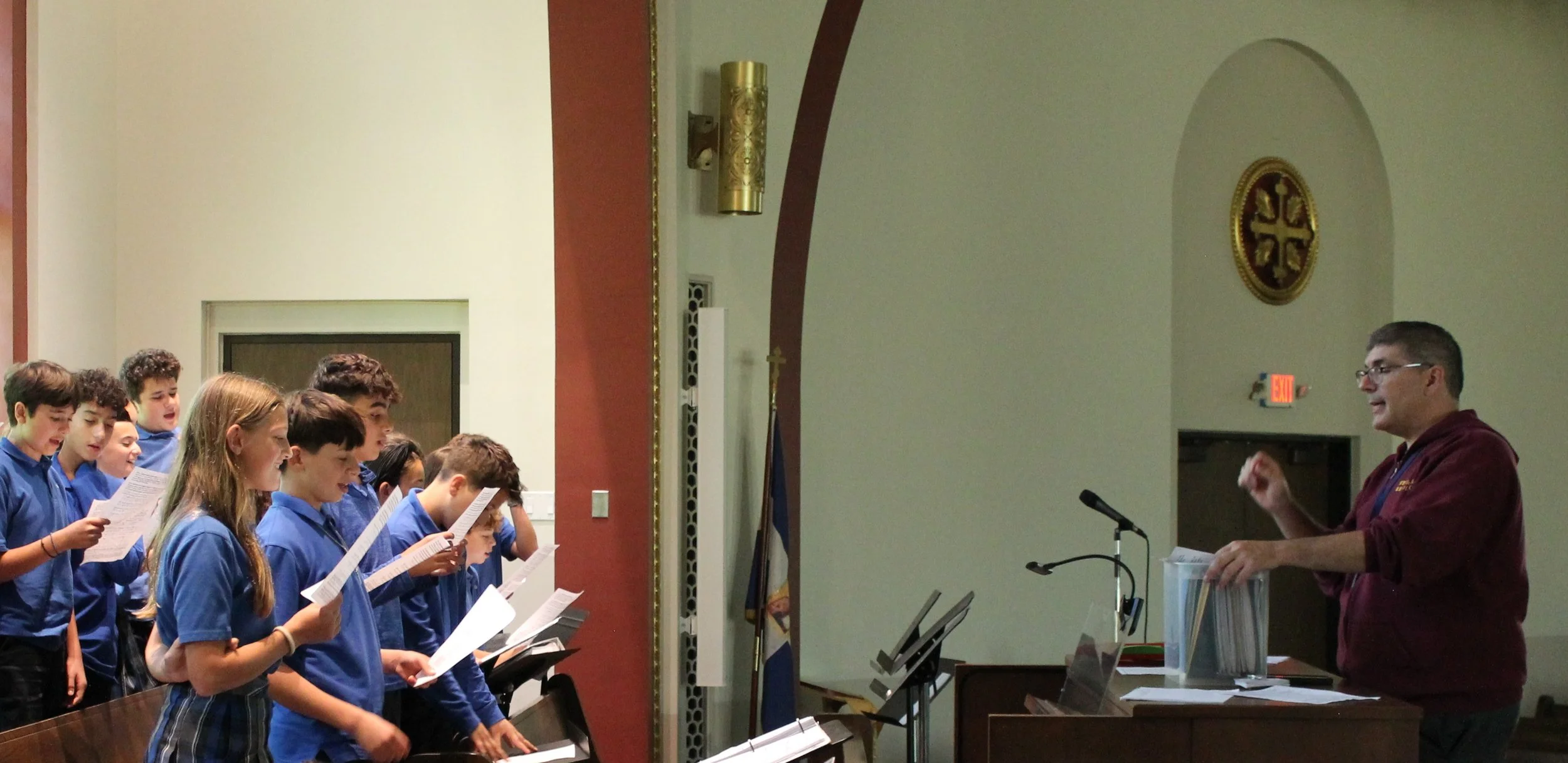
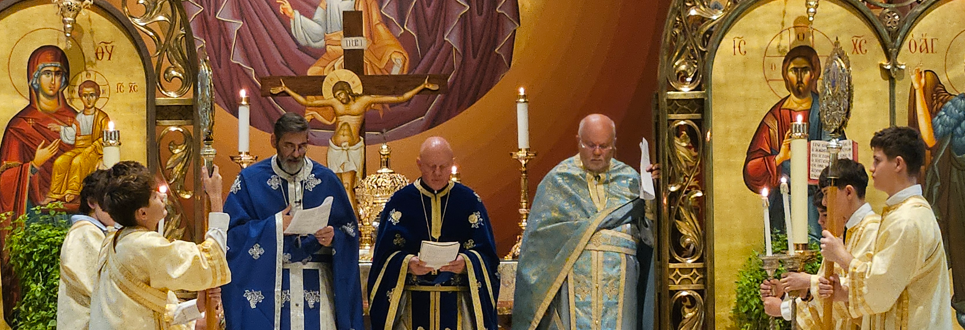
Our middle school students participate in the Byzantine Chant extension once per week, where they learn basic Byzantine notation and various hymns of the Church. While the focus is on liturgical hymns in order to prayerfully sing together during church services, students also learn special feast day hymns throughout the year, and will perform them during various musical programs at Koraes.

-
Preschool & Pre-Kindergarten
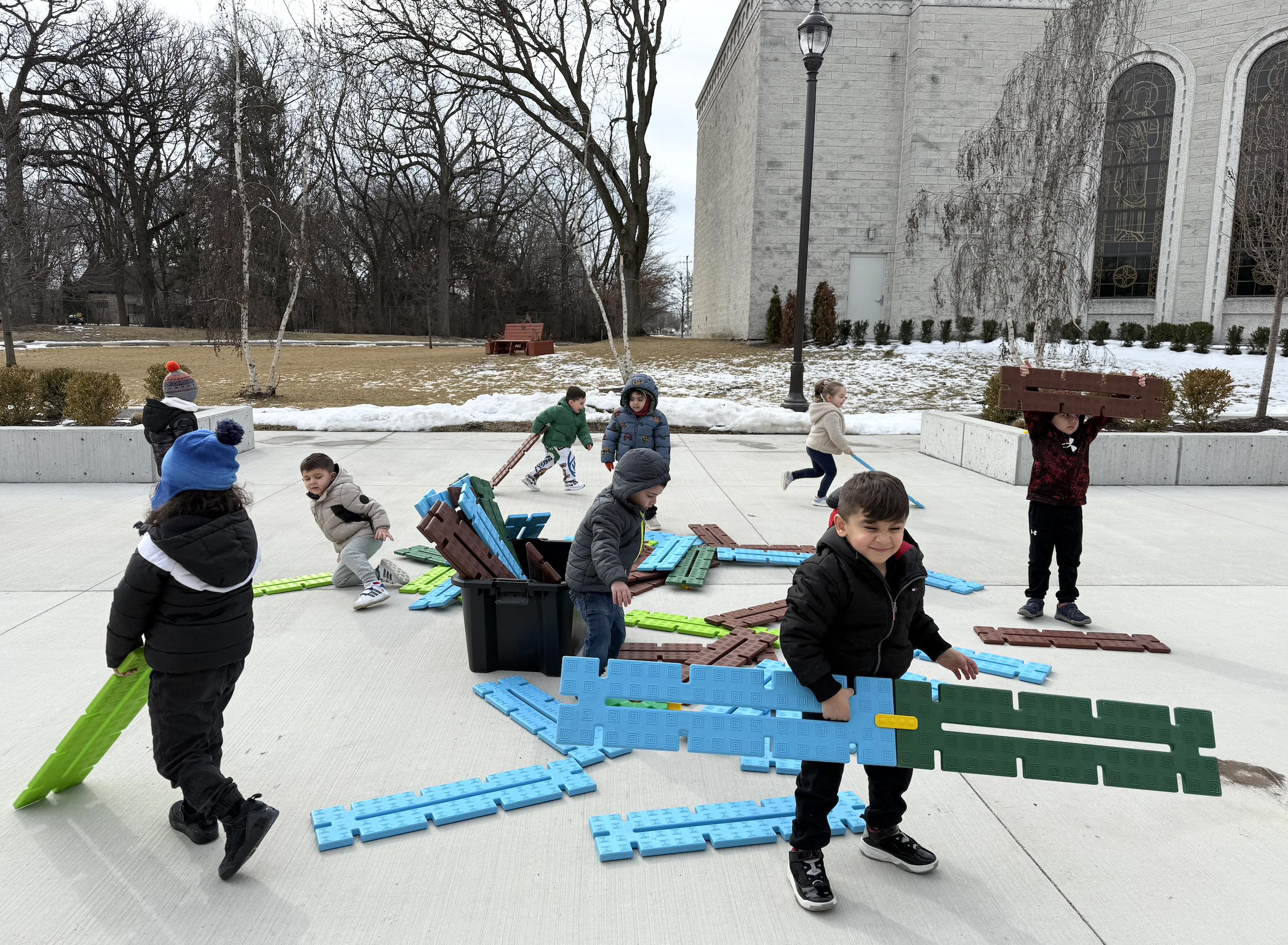
A nurturing environment with flexible half and full-day options that encourage curiosity, social skills, and early love of learning, giving them the confidence they need for a solid academic journey.
-
Kindergarten – 5th Grade
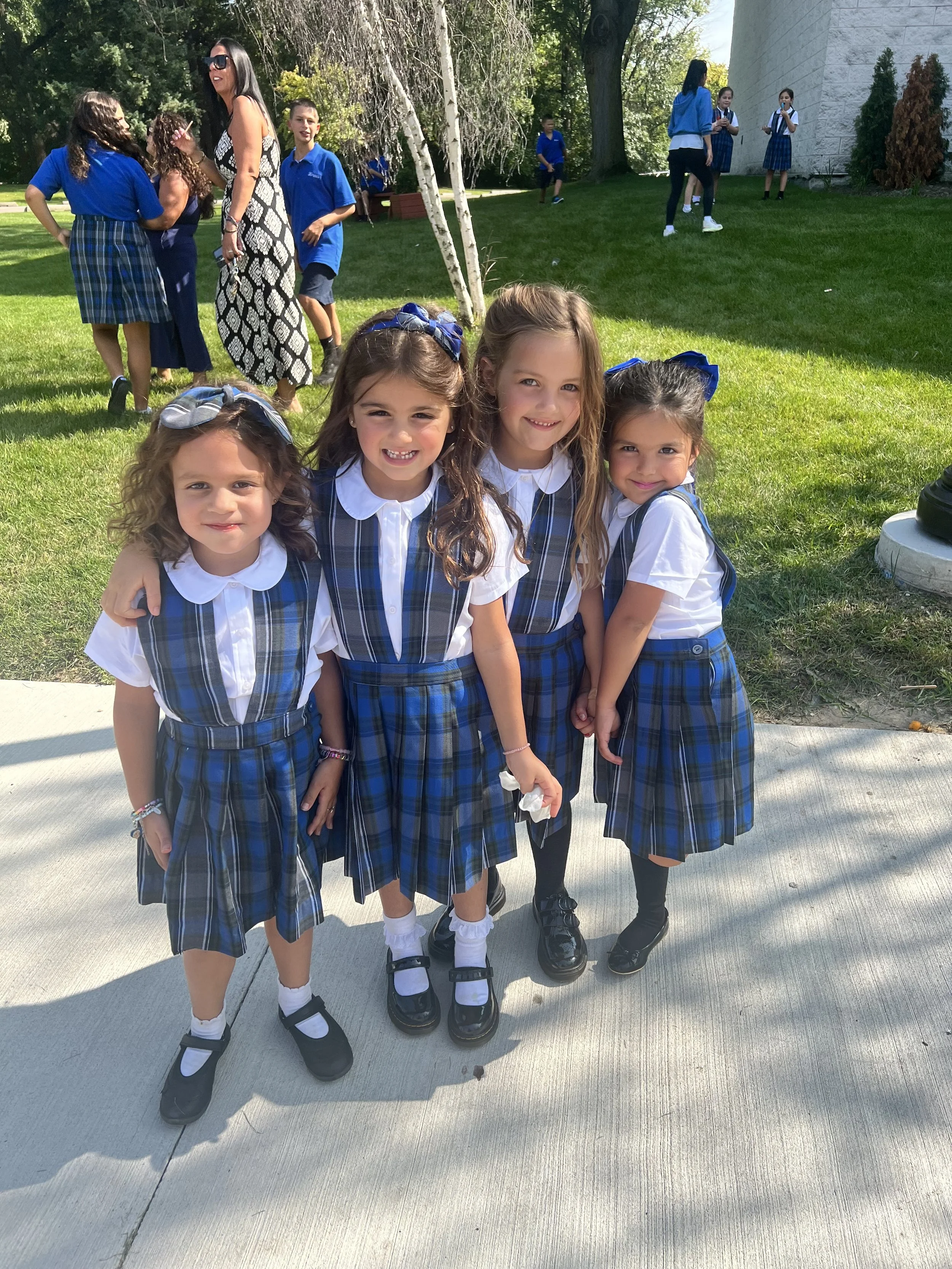
Strong foundations in reading, writing, math, science, and critical thinking, with differentiated instruction to meet diverse learning needs.
-
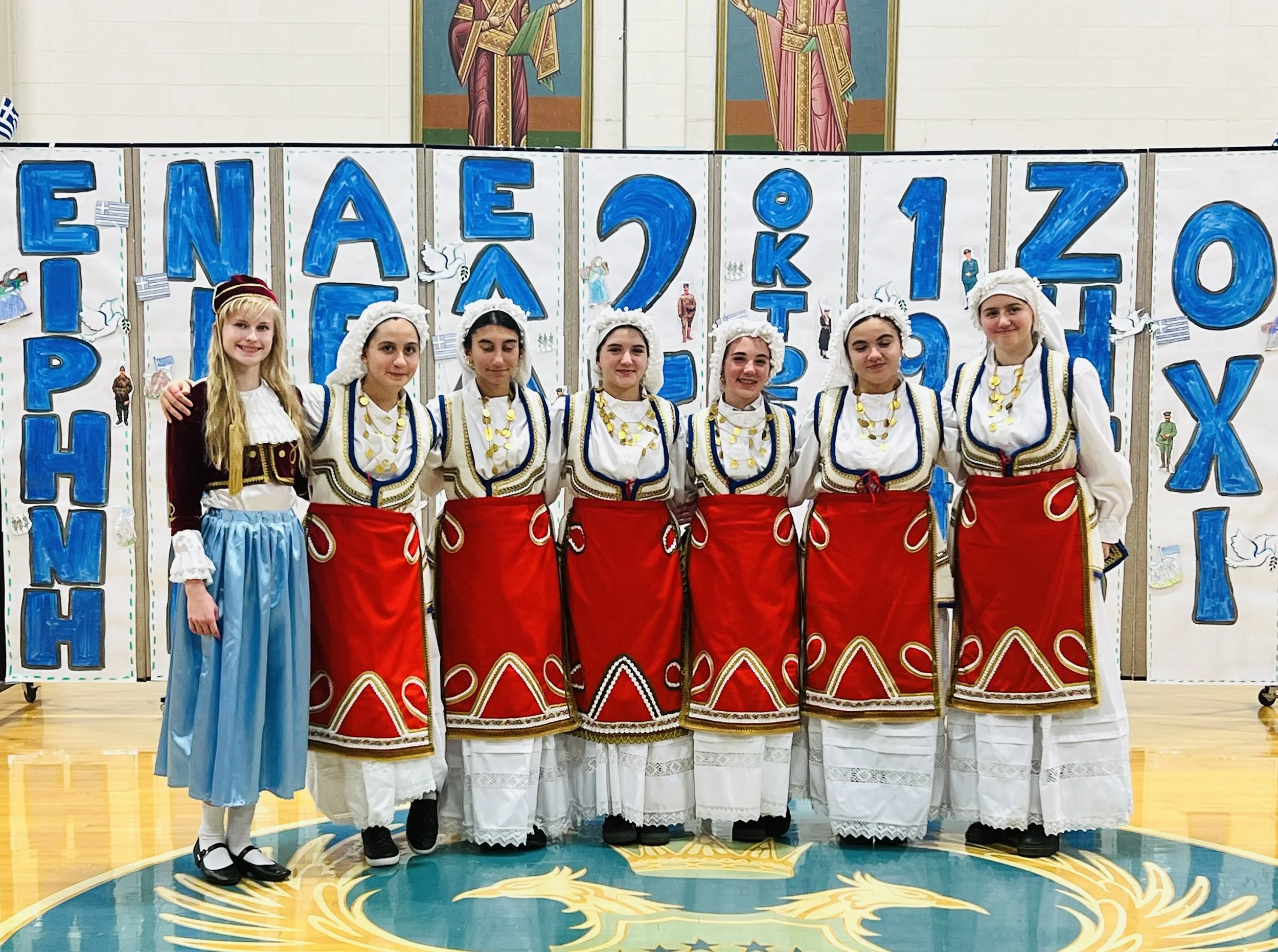
Hellenic Studies
Purposeful integration of Hellenic language and culture helps to assist in the overall development of the child, beginning in preschool. As the years progress, better understanding improves confidence and bolsters future opportunities with programming available to seek out bi-literacy.